the unbound flower

Chintz 01

The World in Chintz

For two centuries, from 1600 to 1800, India was the world’s greatest exporter of textiles, with its fabrics reaching markets across the globe. Their influence even entered the English language: calico, dungaree, khaki, pyjamas, sash and seersucker all have Indian origins. Of these, chintz carried a particularly charged history. Its importation revolutionised European taste and fashion, challenged established textile industries and provoked political controversy powerful enough to threaten governments.

Today, chintz describes any cotton or linen furnishing fabric with a floral pattern. In the eighteenth century, however, the term referred specifically to Indian cotton textiles made for European markets using specialised mordant and resist-dyeing techniques.
Chintz 02

The Science of Mordant Dyeing

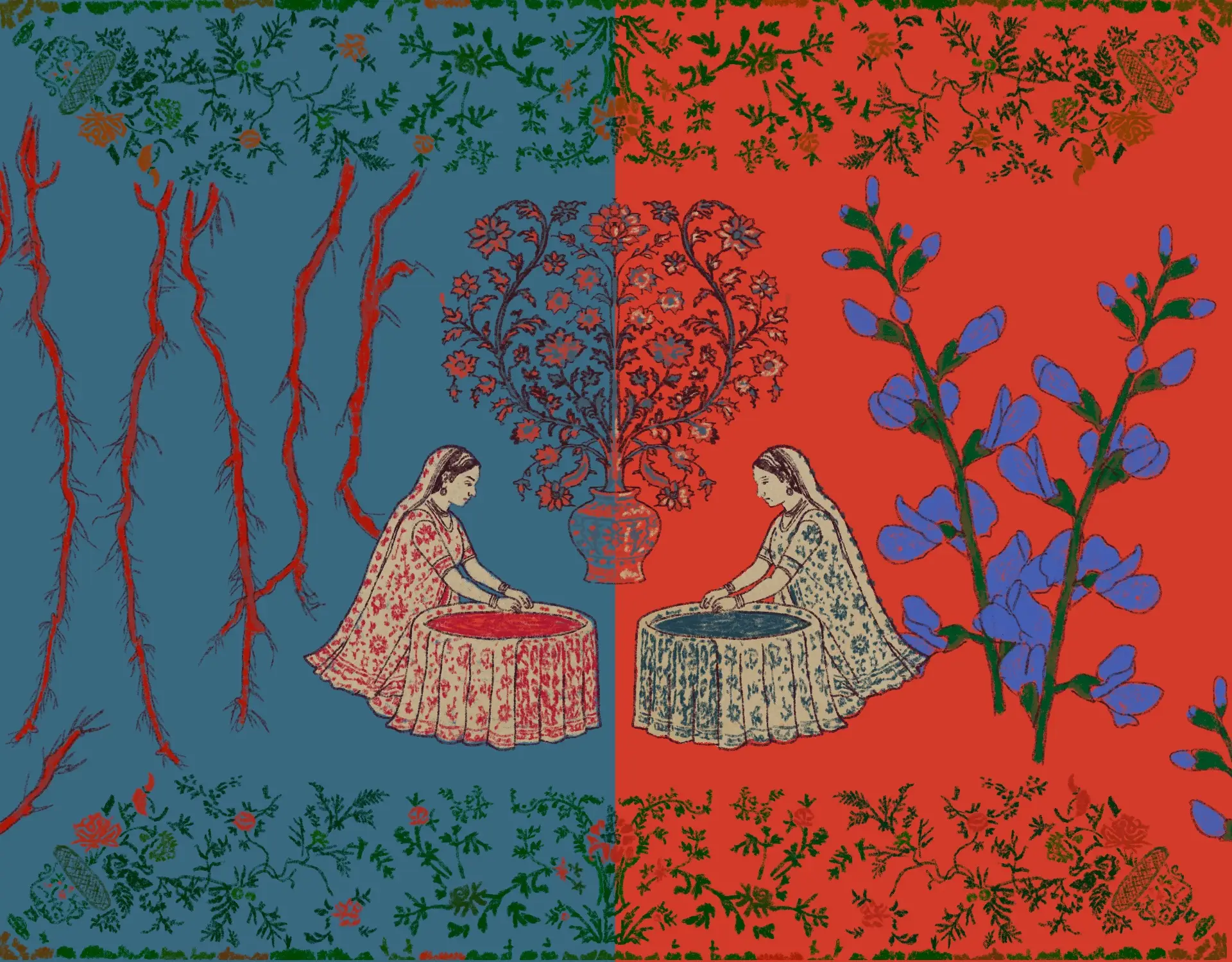
The appeal of Indian chintz lay in its brilliant, lasting colours. European painted and printed fabrics often used pigments that faded or washed away, whereas Indian dyers had mastered a complex chemical process. Metallic salts called mordants reacted with dyes to form insoluble coloured compounds within the cotton fibre, producing exceptionally fast colours. Madder yielded reds, indigo produced blues, and green was created by painting yellow over indigo-dyed cloth. This knowledge was particularly remarkable because cotton is difficult to dye evenly. The expertise of Indian dyers made these textiles highly desirable in European markets.

Chintz 03

The Making of the Cloth

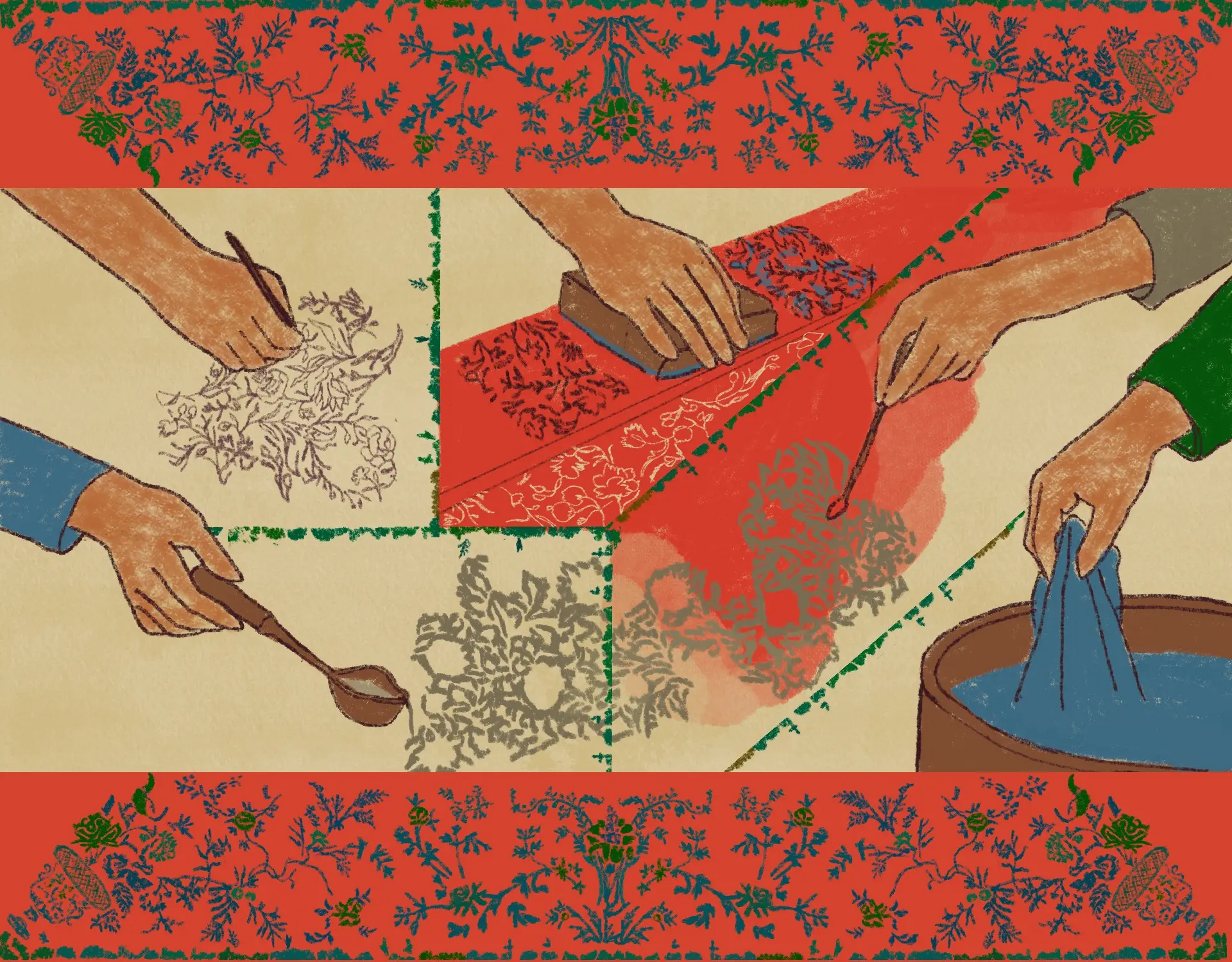
Fine chintz was painstakingly painted by hand. Artisans drew designs onto cotton and applied mordants to selected areas, using resists such as wax to protect other sections during dyeing. Indigo was often dyed separately, while different stages of the process required specialised skills. Less expensive chintz was block-printed, with gum-thickened mordants producing generally inferior results. After 1700, the Coromandel Coast became a major centre of production for European markets. Work took place outdoors, often on riverbanks, and had to stop during the monsoon. The intricate designs were the result of slow, exacting labour and a highly developed understanding of materials.

Chintz 04

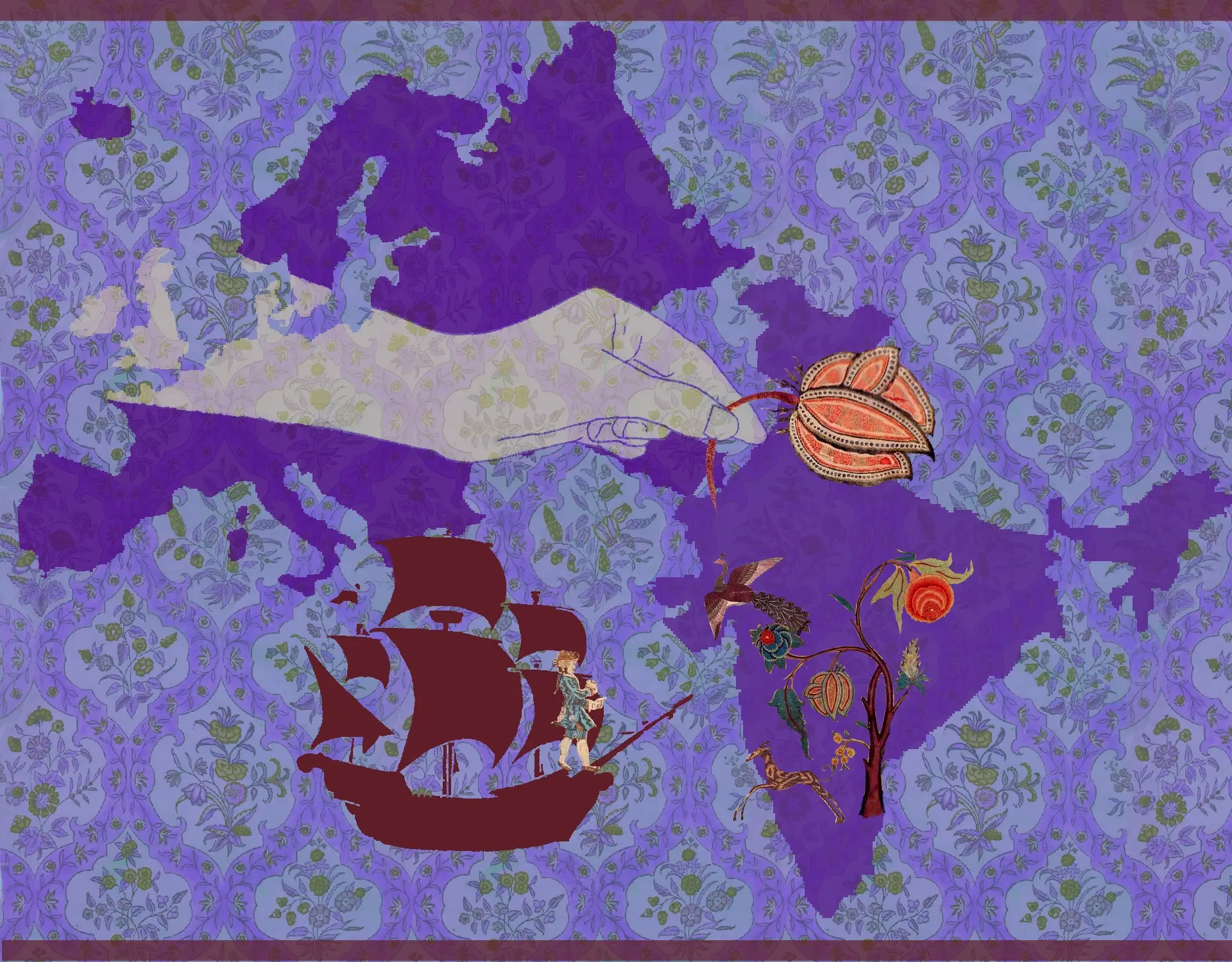
The Flower Taken by Europe

European fascination with Indian chintz extended beyond its colours to its extraordinary floral designs. The flowering tree, in particular, became a powerful source of inspiration for European decorative arts and textile design. Indian patterns travelled through trade, entering European collections and influencing the visual language of printed fabrics and interiors. European designers and manufacturers increasingly drew upon motifs that Indian artisans had developed and perfected. The flower crossed oceans, carrying Indian design traditions into a European market that would eventually seek to reproduce them on its own terms.

Chintz 05

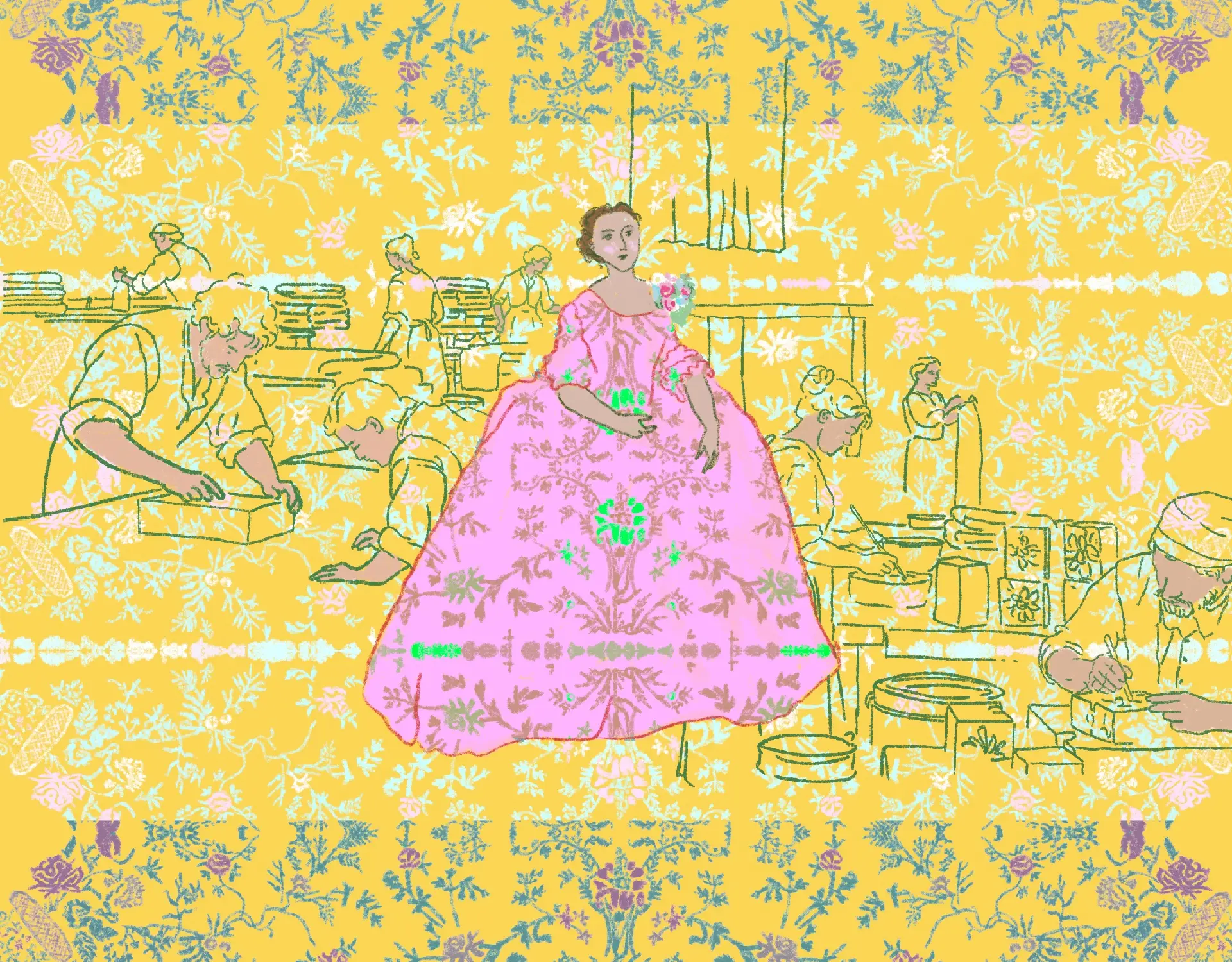
Chintz Transforms European Taste

The appeal of Indian chintz lay in its brilliant colours, which retained their intensity far longer than European painted and printed fabrics. Before Indian textiles entered these markets, European techniques often relied on pigments that faded or washed away. Indian cottons offered both colourfastness and elaborate designs, transforming European taste and fashion. Chintz was used for dress materials as well as furnishings, and its popularity challenged existing ways of producing and decorating cloth. Its influence was so powerful that the demand for Indian textiles became an economic and political problem for European manufacturers and authorities.

Chintz 06

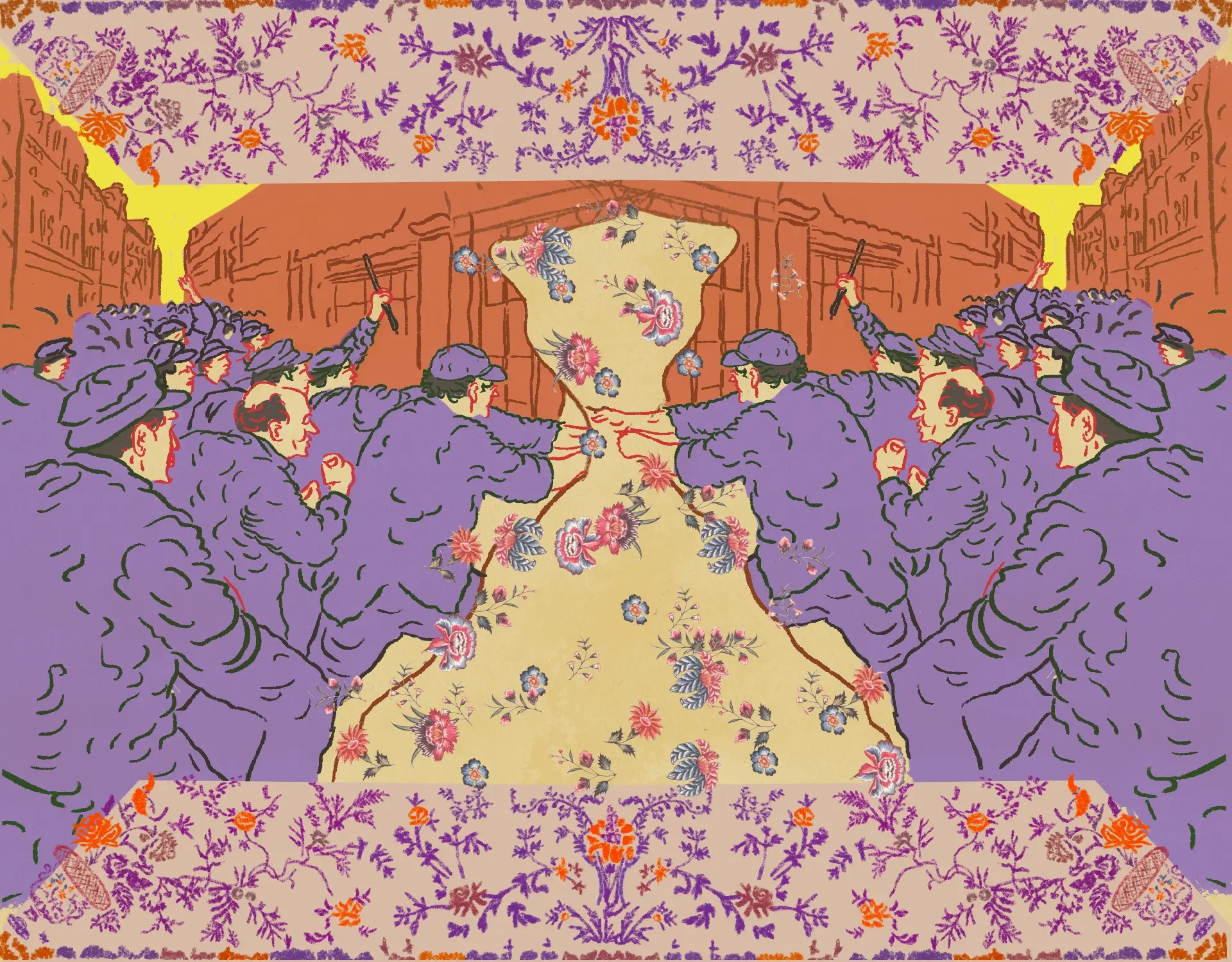
The Revolt Against Chintz

The popularity of Indian cottons provoked resistance from European textile producers, who feared the competition. In England, restrictions introduced in 1700 and 1721 sought to protect domestic woollen and silk industries by curbing Indian printed and painted cottons. The controversy went beyond questions of fashion: it concerned trade, employment and economic power. Yet the circulation of Indian textiles did not simply end with these restrictions. A chintz quilt made for the Dutch market, stamped by the United East India Company and found in the Netherlands, was probably part of the re-export trade during the English ban. The cloth continued to travel, even as authorities attempted to control its movement.

Chintz 007

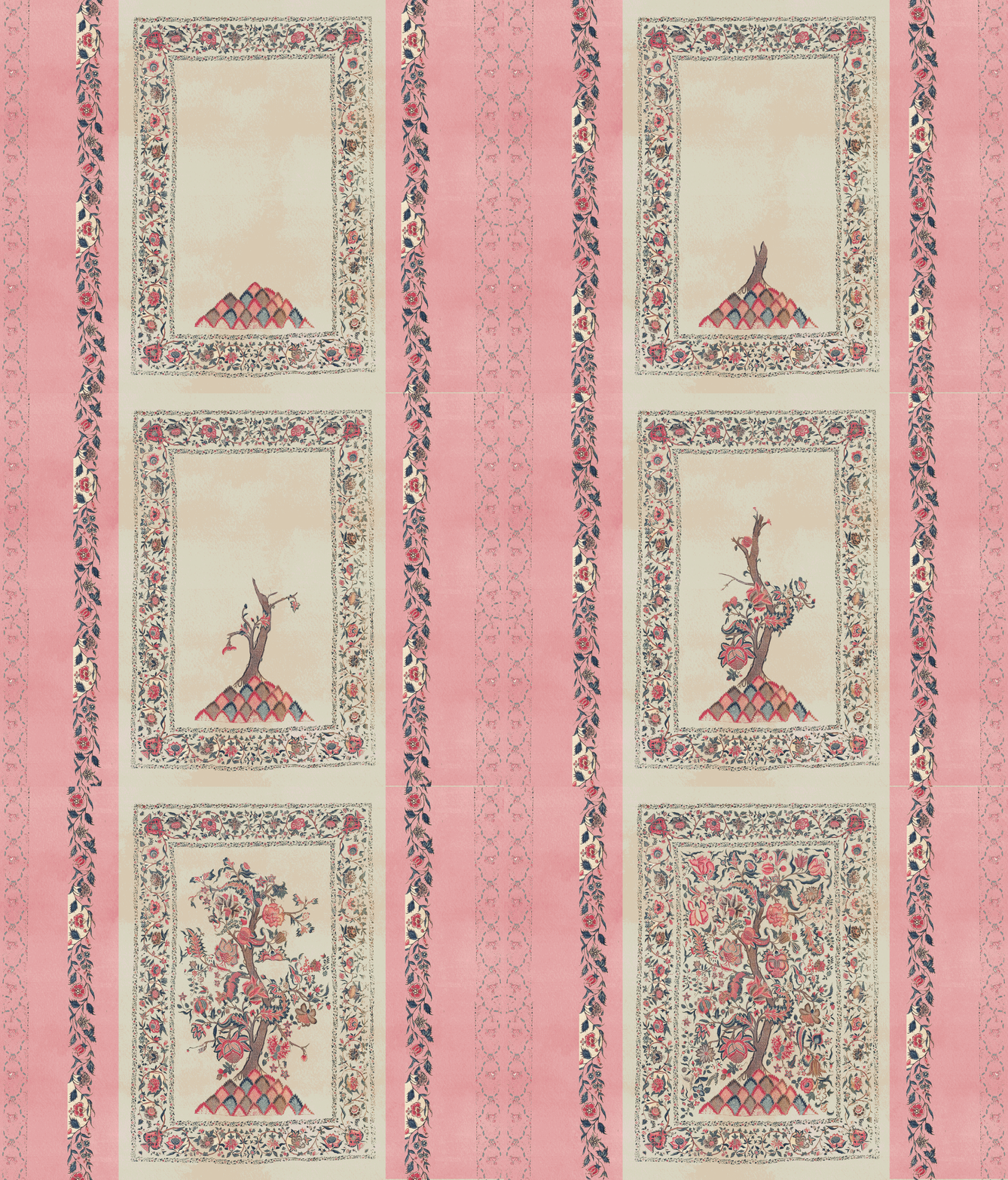
The Flower Transformed

As demand grew, chintz designs were repeatedly adapted to suit different markets. Palampore painters reversed trees, changed borders, removed large blossoms, extended branches and added new flower sprays or peacocks to accommodate different dimensions. The designs were not fixed templates but evolving compositions, modified to meet the demands of merchants and buyers.

Their visual language also became increasingly hybrid. Angular branches and shaded mounds reflected influences from Chinese embroideries and wallpapers, while flowers drew on European engravings and decorative styles. As European printing techniques advanced, chintz-inspired florals spread into dresses, curtains and upholstered interiors, reproduced on an increasingly industrial scale. Designs rooted in Indian craftsmanship became ubiquitous in European life, even as the balance of textile production and profit shifted.

Chintz 08

Palampore and the Ubiquity of the Flower

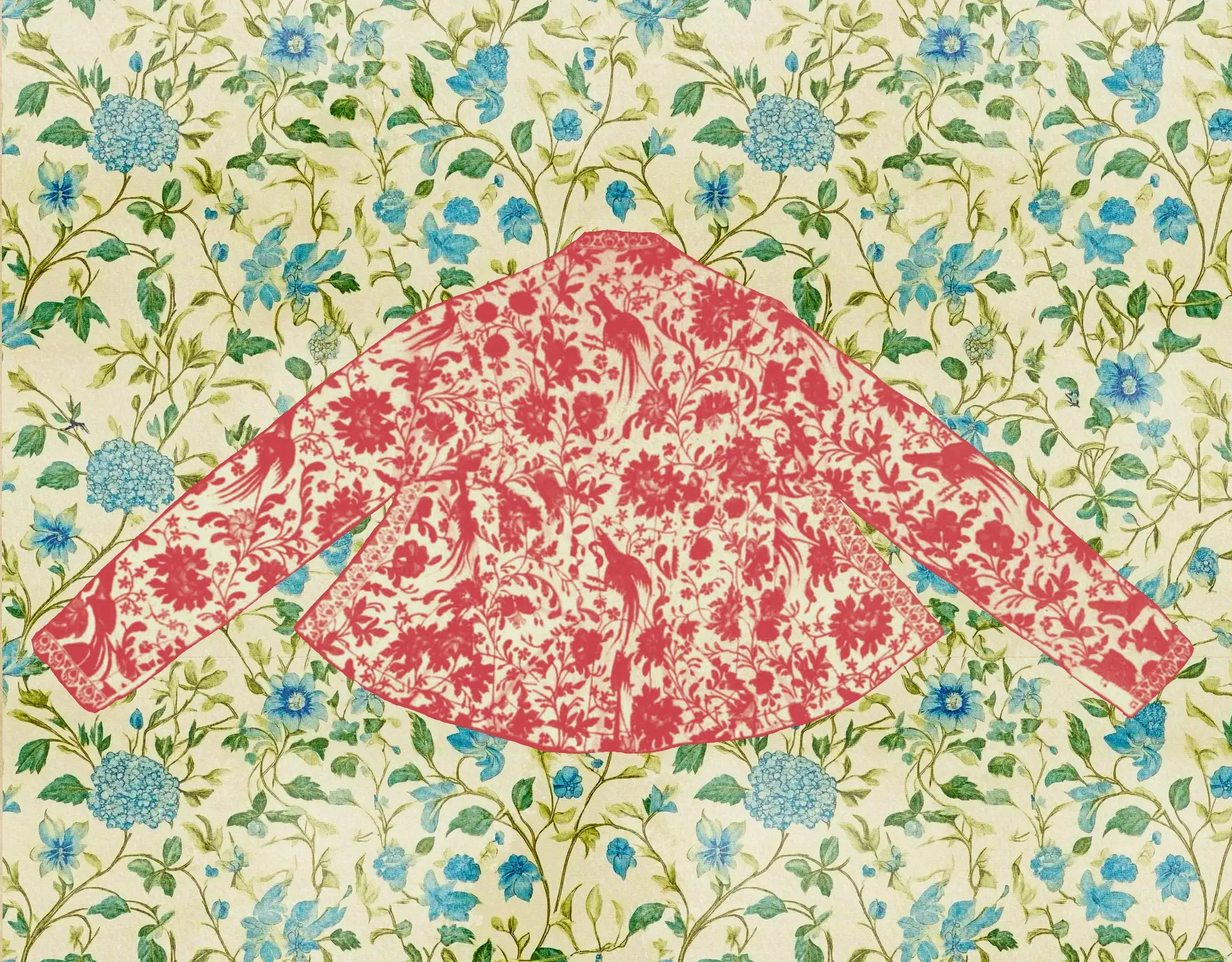
The flowering tree did not remain confined to the palampore. By the late seventeenth century, the meaning of chintz had expanded to include furnishing fabrics such as bedspreads and hangings, alongside the dress materials for which Indian cottons were already known. The same floral language could appear across textiles made for different uses, bringing painted trees, blossoms and winding branches into domestic interiors.

The later history of these patterns is visible in the collection of Harry Wearne, a designer of wallpapers and printed textiles who gathered Indian chintzes alongside French printed cottons, European silks and embroideries for inspiration in his own work. The flowering tree thus travelled beyond the original cloth, entering other forms of decorative design. What began as the work of Indian dyers and painters became part of a wider visual vocabulary of furnishing and printed textiles. The flower had travelled from a carefully painted cotton to the patterns through which people decorated their everyday surroundings.

Scroll to Top