Stitching Cartography

Kt1

A Geography of Encounters

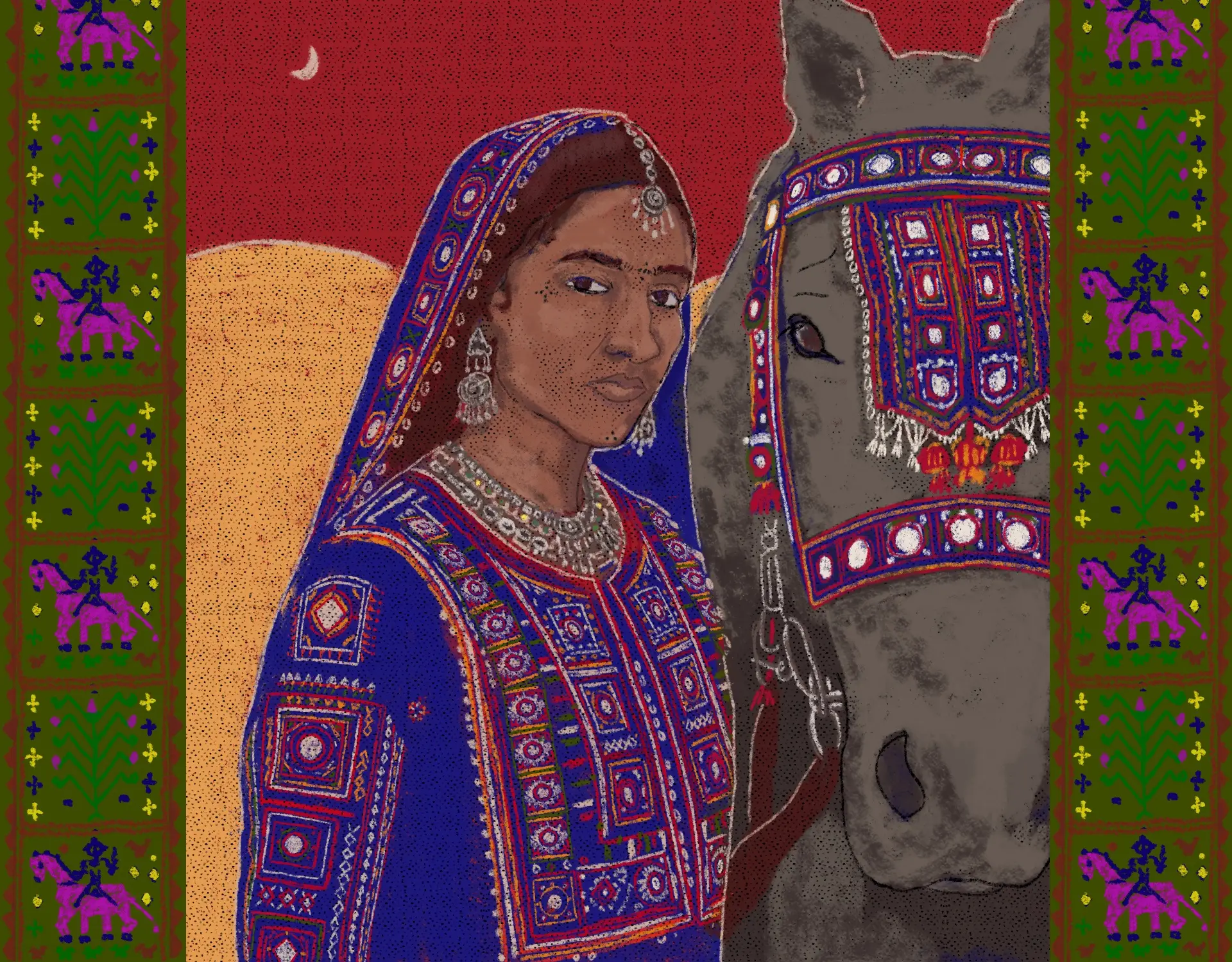
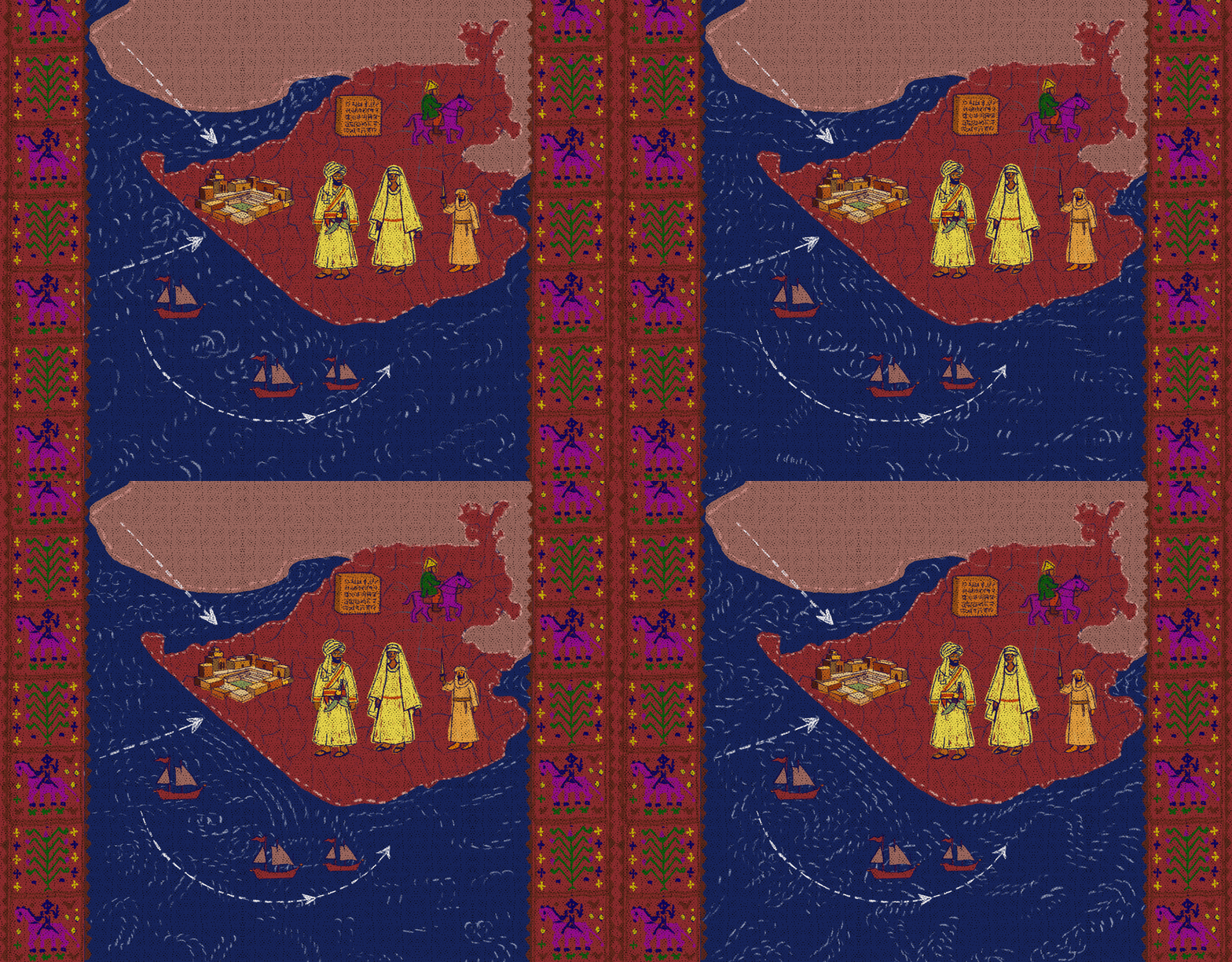
Saurashtra was once a mosaic of nearly two hundred small principalities along the Arabian Sea. Archaeological evidence connects the region to Indus Valley sites and Ashokan inscriptions, while its ports linked it to Arabia, West Asia and Europe. Centuries of trade, conquest and migration brought new communities to the peninsula. Over time, these encounters reshaped local life. Their traces remain not only in history, but in the motifs, materials and techniques that settled into craft.
Kathiawari Embroidery 02

Migration Leaves Motifs

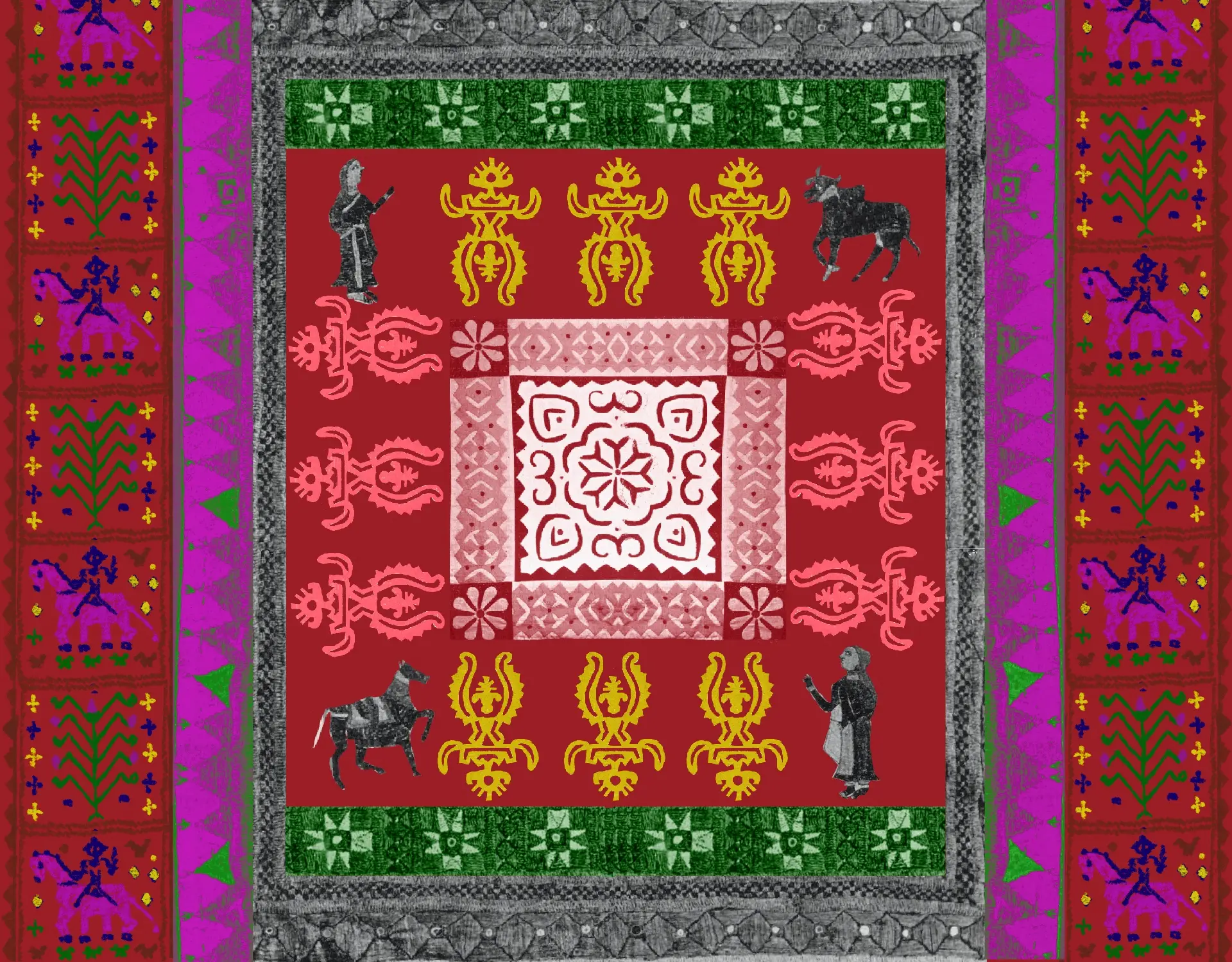
Arrivals rarely survive in textiles as portraits. They persist as motifs, stitch vocabularies and colour pairings. Design elements from different histories meet and become integrated into a single surface. Embroidery does not simply record cultural contact; it transforms it. What political history describes through invasion, migration and shifting boundaries, the textile holds as a process of absorption, adaptation and reinvention.

Kathiawari Embroidery 03

When Cloth Became Architecture

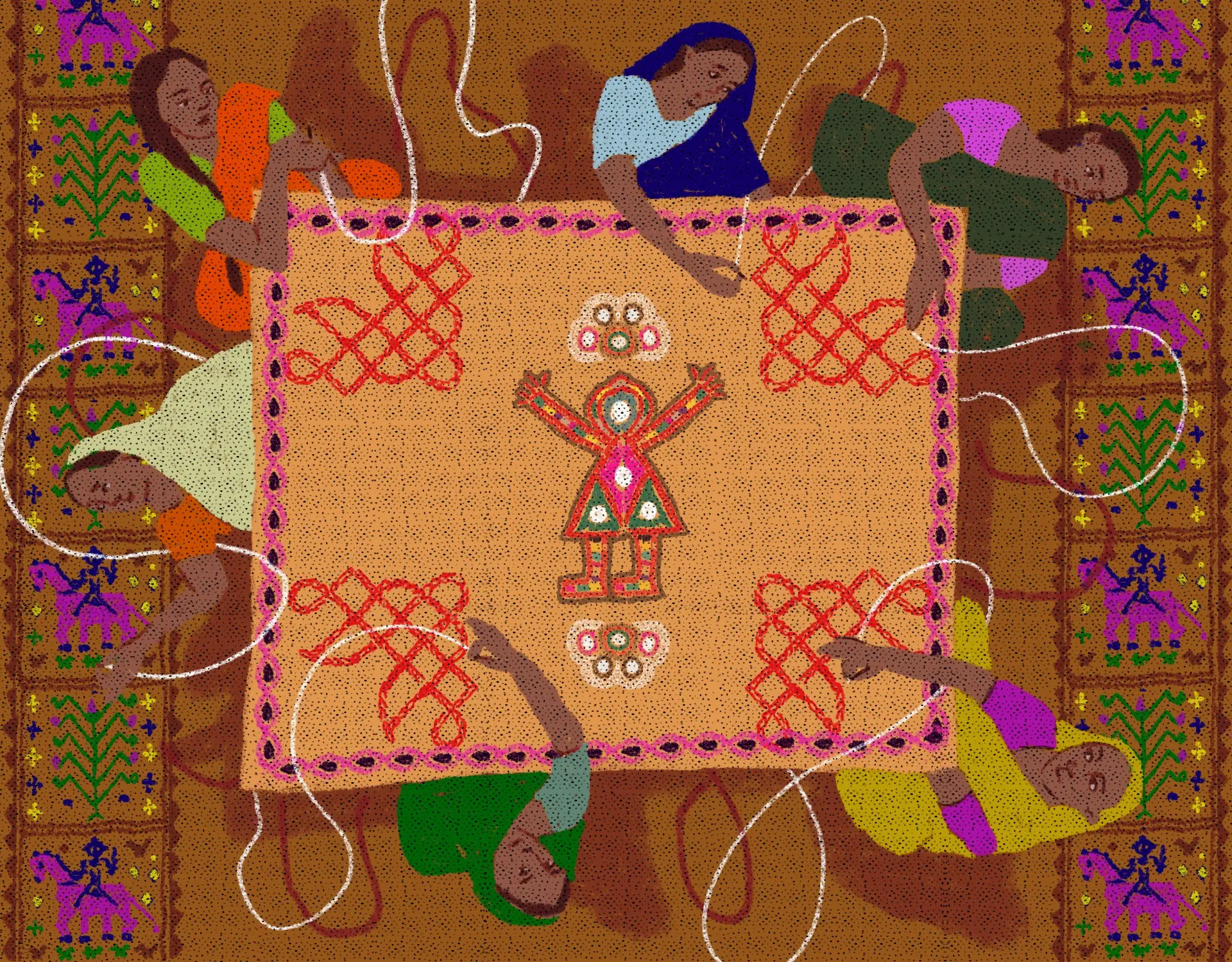
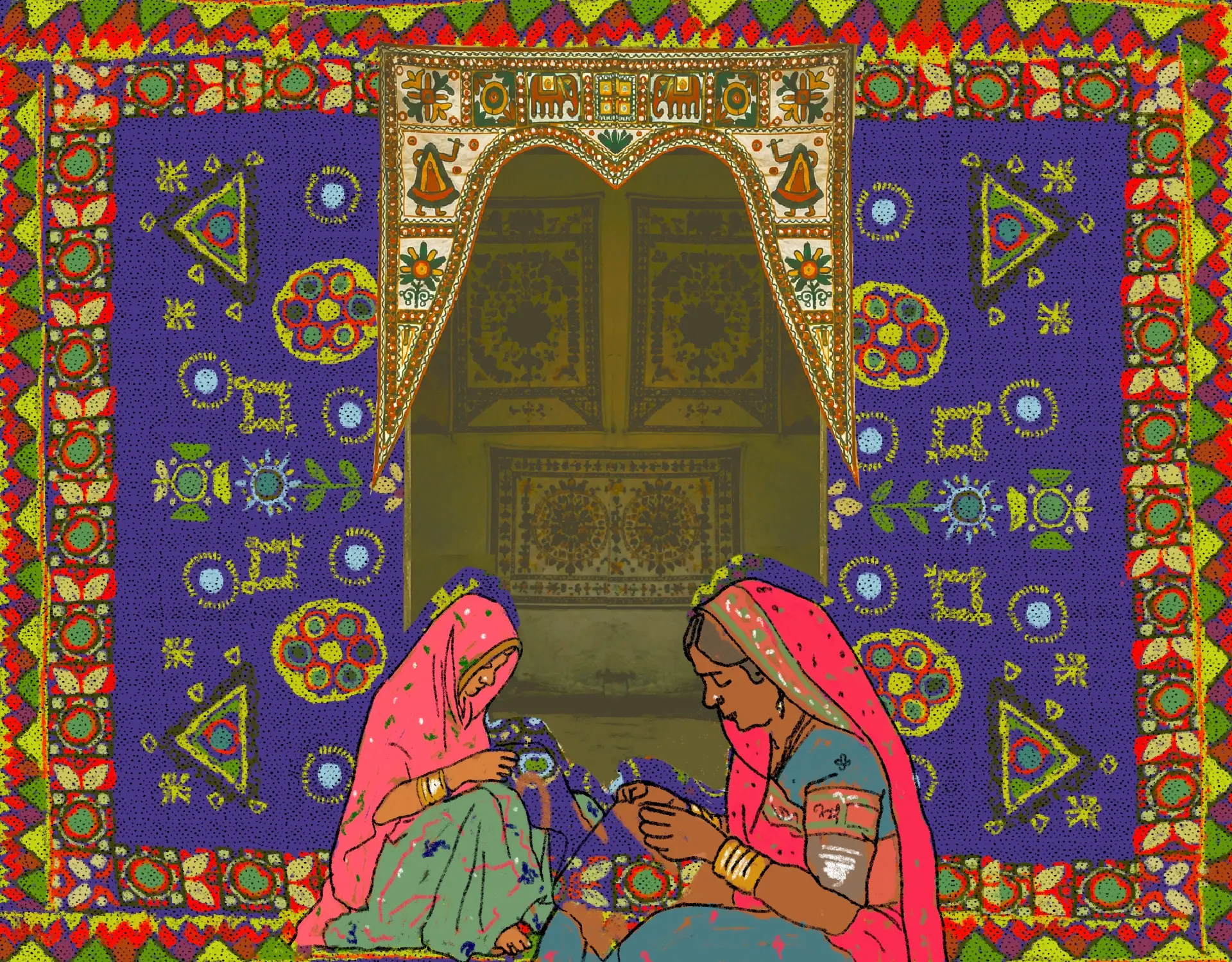
A carved doorway signalled status, but not every household could afford stone or wood. Women embroidered torans to mark their thresholds, while chaklas and chandrawas animated interior walls. These textiles carried auspicious meaning and transformed domestic space through colour, pattern and labour. Where architecture relied on expensive materials, embroidery offered another means of making presence felt. Thread became a way of building, and the home itself became a surface for artistic expression.

Kathiawari Embroidery 04

The Geometry of Heer and Abhla Bharat

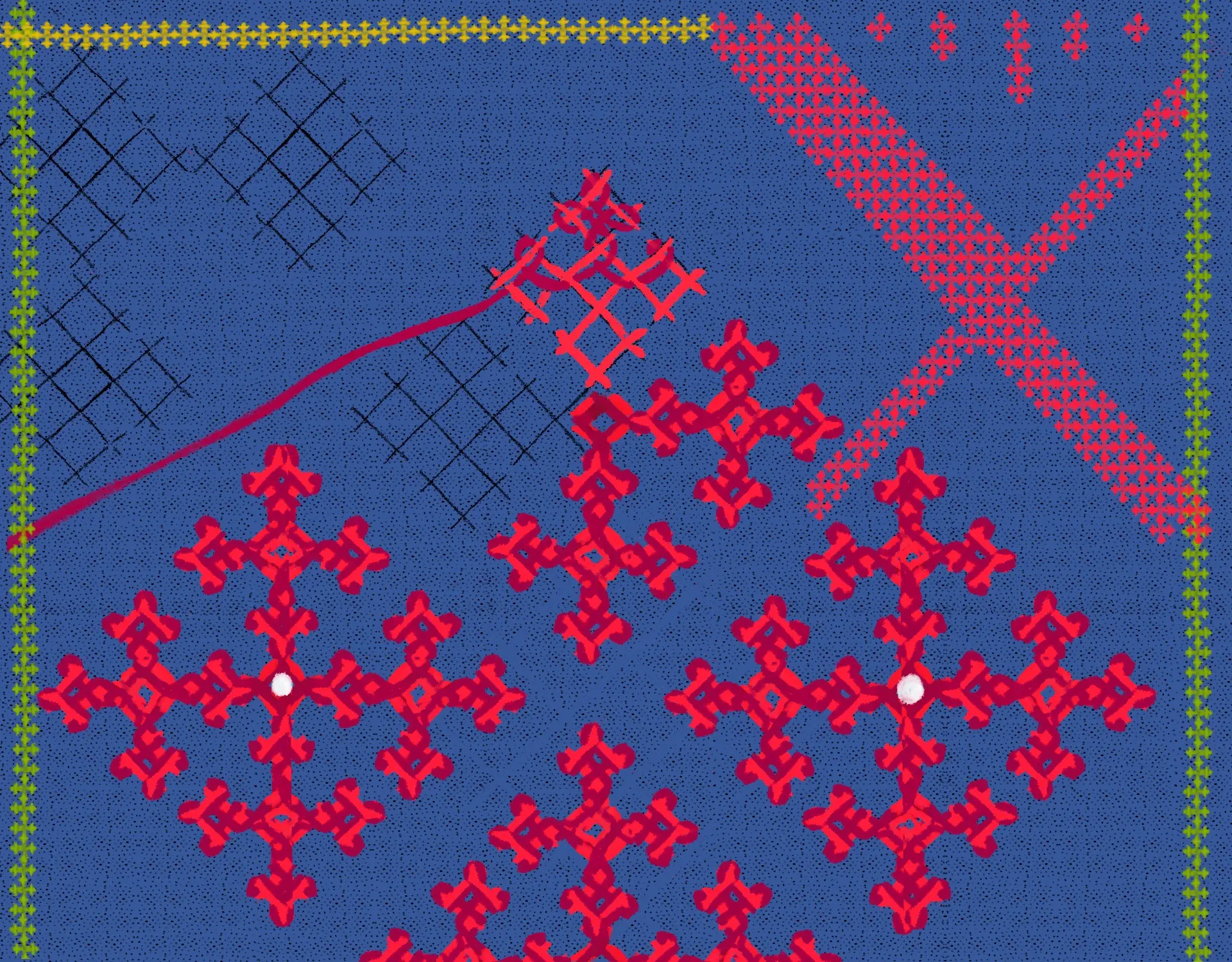
In Heer Bharat, floss silk meets deep indigo, with crimson balanced by black and off-white. Long stitches construct triangles and rectangles, their direction shifting along warp and weft to create light and shadow without changing colour. Mirrors punctuate the geometry at calculated intervals.

In Abhla Bharat, small round mirrors are secured with buttonhole stitch and framed by stem or dense herringbone embroidery. Rust meets deep red, light green meets Indian pink, and indigo anchors the composition. After Partition, mirror work expanded as women relied on embroidery for income. In contemporary variations, dark cloth and same-colour thread intensify the mirror’s glow. Across both forms, stitch and reflection are not mere embellishment, but systems for organising light, colour and space.

Kathiawari Embroidery 05

Stories in Chain Stitch

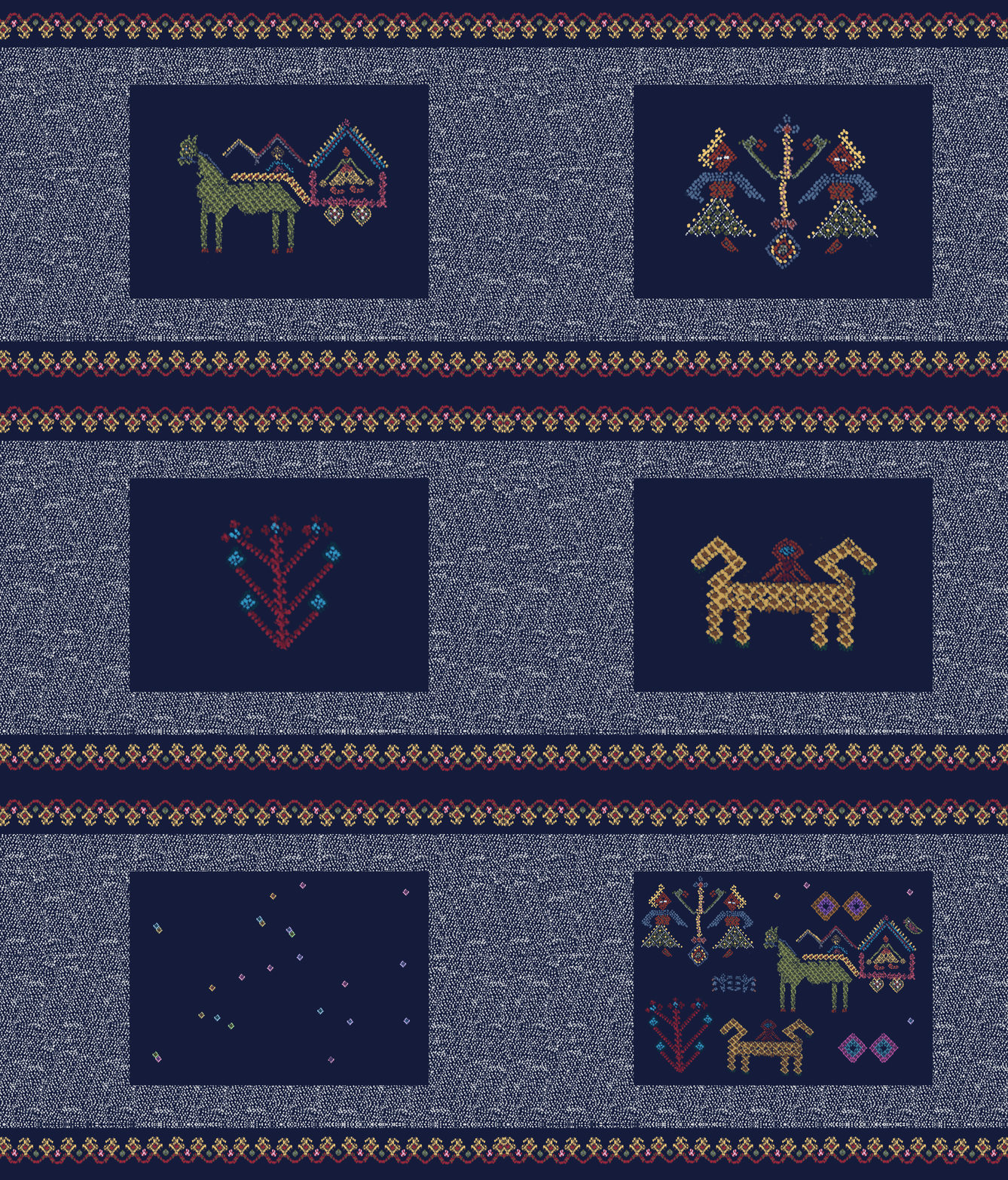
In the chain stitch embroidery of Bhavnagar, minute stitches construct riders, palanquins, women at work and children flying kites. A surrounding running stitch lends movement to the figures, while mirrors become eyes, suns and moons, punctuating the scenes with symbolic meaning. Controlled colour and shifting texture distinguish each form. The cloth becomes a record of everyday Kathiawar life, where people, occupations and familiar scenes are preserved not in written accounts, but in thread.

Kathiawari Embroidery 06

The Architecture of Interlacing

In Sindhi Taropa, foundation threads are laid first, then loops interlace over them to form hexagons and lozenges, often centred with a mirror. The stitch is applied selectively, defining shapes rather than covering the entire surface. Its presence across Sindh, Baluchistan, Kutch and Kathiawar suggests a shared regional vocabulary, one that travelled and evolved across geographical boundaries. Its intelligence lies as much in the spaces left open as in the threads that cross them.

Kathiawari Embroidery 07

Repair as Reinvention

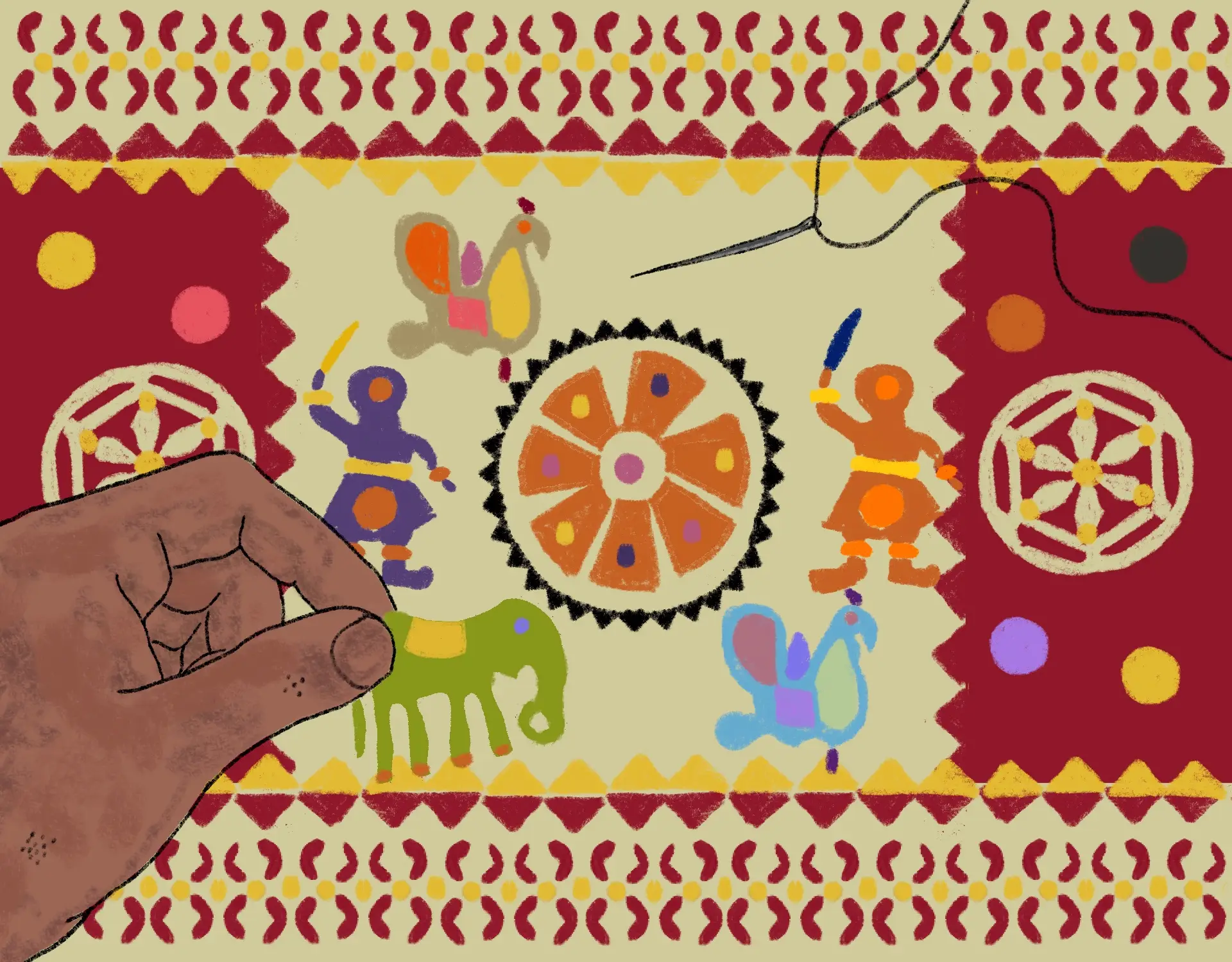
Kathiawari appliqué grows from repair. Fragments of coloured cloth are stitched onto a white base to create torans, chandrawas, chaklas and saddle covers. Peacocks, elephants, horses and warriors emerge from discarded pieces. What begins as mending becomes image-making. Necessity becomes a language of design, transforming remnants into objects that shape domestic space.

Kt8

What the Threads Remember

In Moti Bharat, beads construct the surface, often without cloth beneath. Purple, yellow, red and green form elephants with haudahs, camels with riders and women churning butter. Ornament becomes image; individual beads assemble into scenes of everyday life.

Across Kathiawar’s embroideries, migration, exchange and women’s labour leave their imprint. Motifs travel, techniques evolve, and everyday life becomes design. These textiles build where stone and wood are absent, and narrate where written records fall silent. Whether stitched, interlaced, patched or beaded, each surface holds a way of inhabiting and imagining the world. These are not simply remnants of the past, but material records of how communities continually
remake it.

Scroll to Top