The Premonition (1850)
A planter writes by lamplight that the abuse he witnesses will one day return to its makers.
Outside, the indigo fields sleep, holding a history far older than the empire that now claims them.
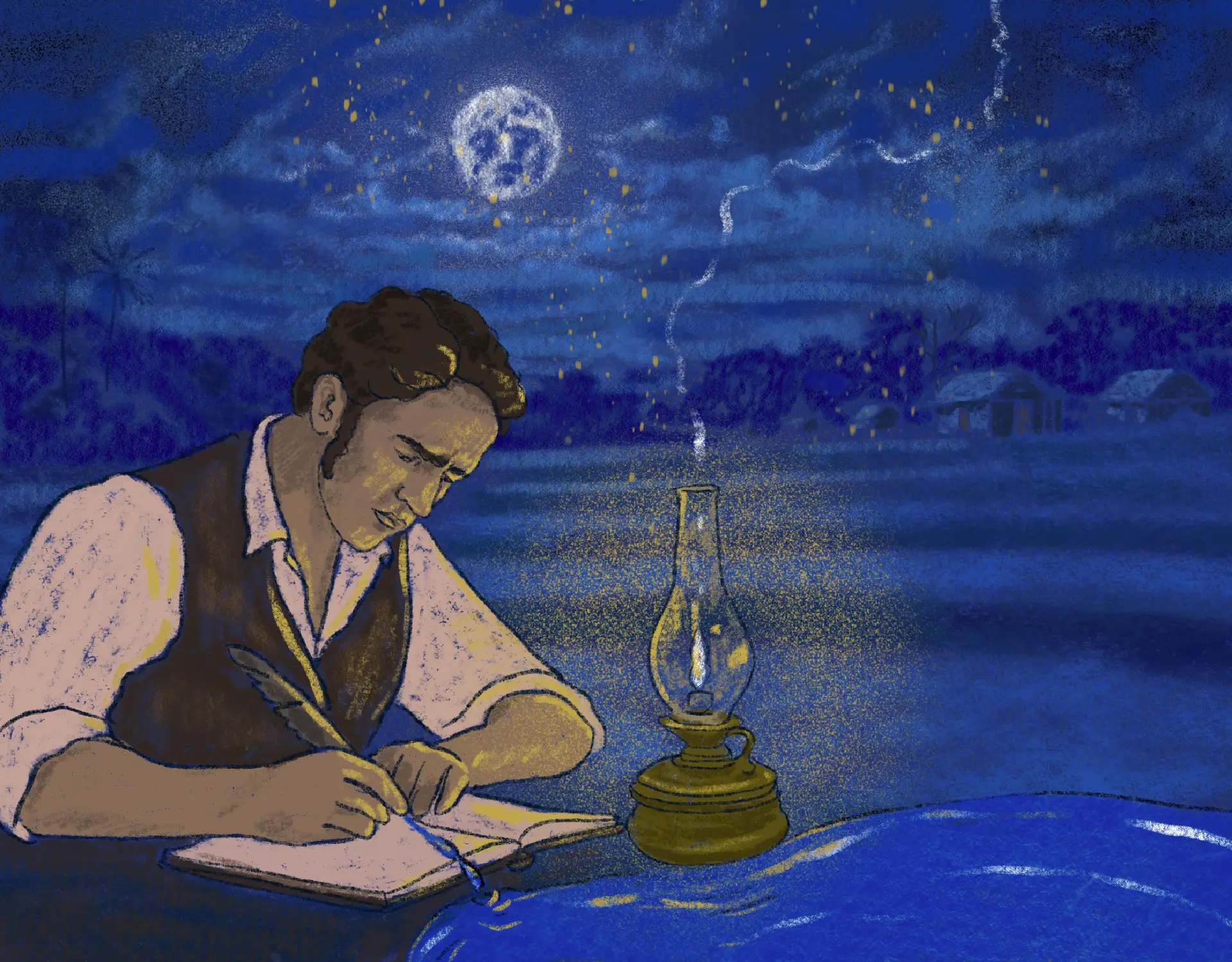
A planter writes by lamplight that the abuse he witnesses will one day return to its makers.
Outside, the indigo fields sleep, holding a history far older than the empire that now claims them.
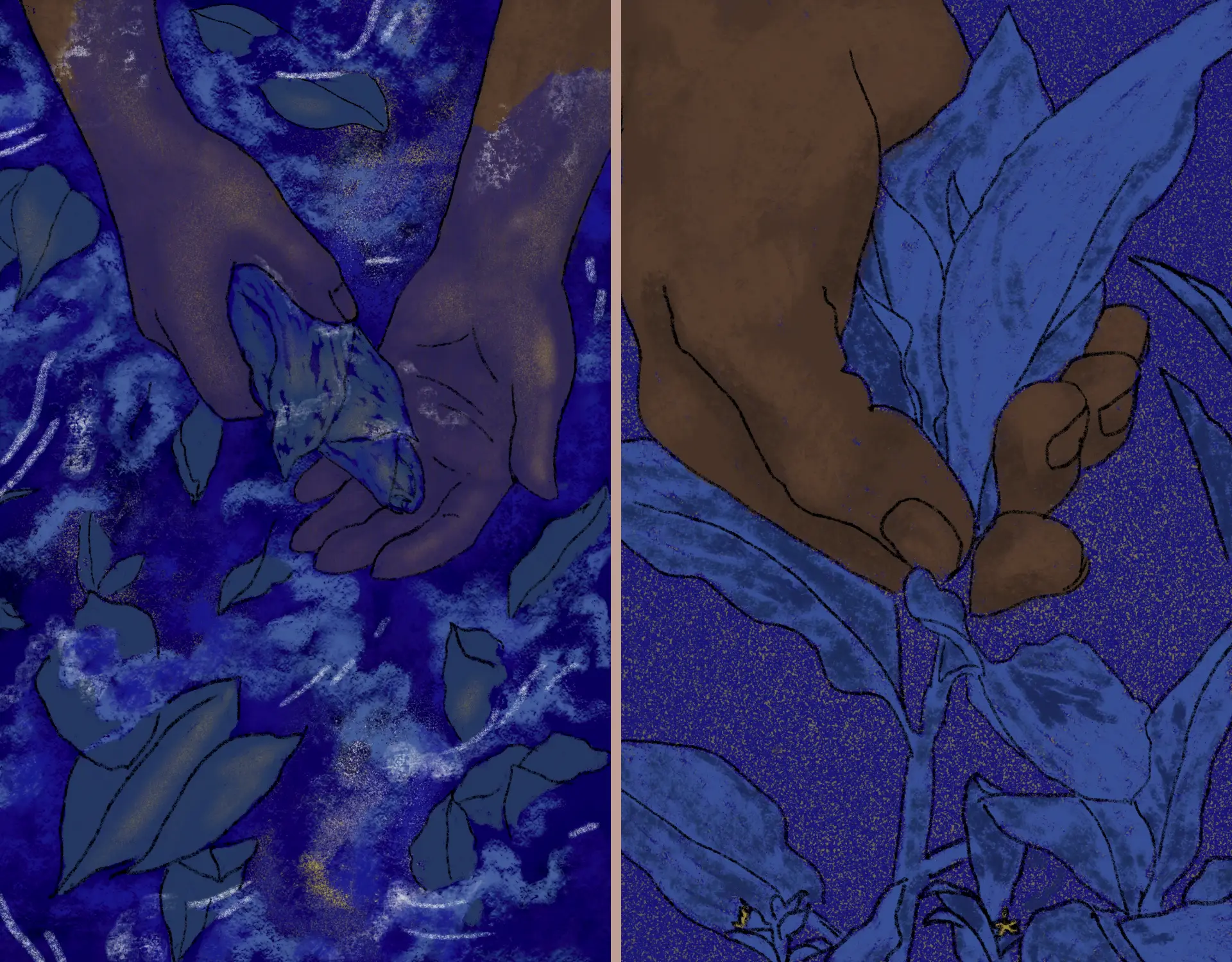
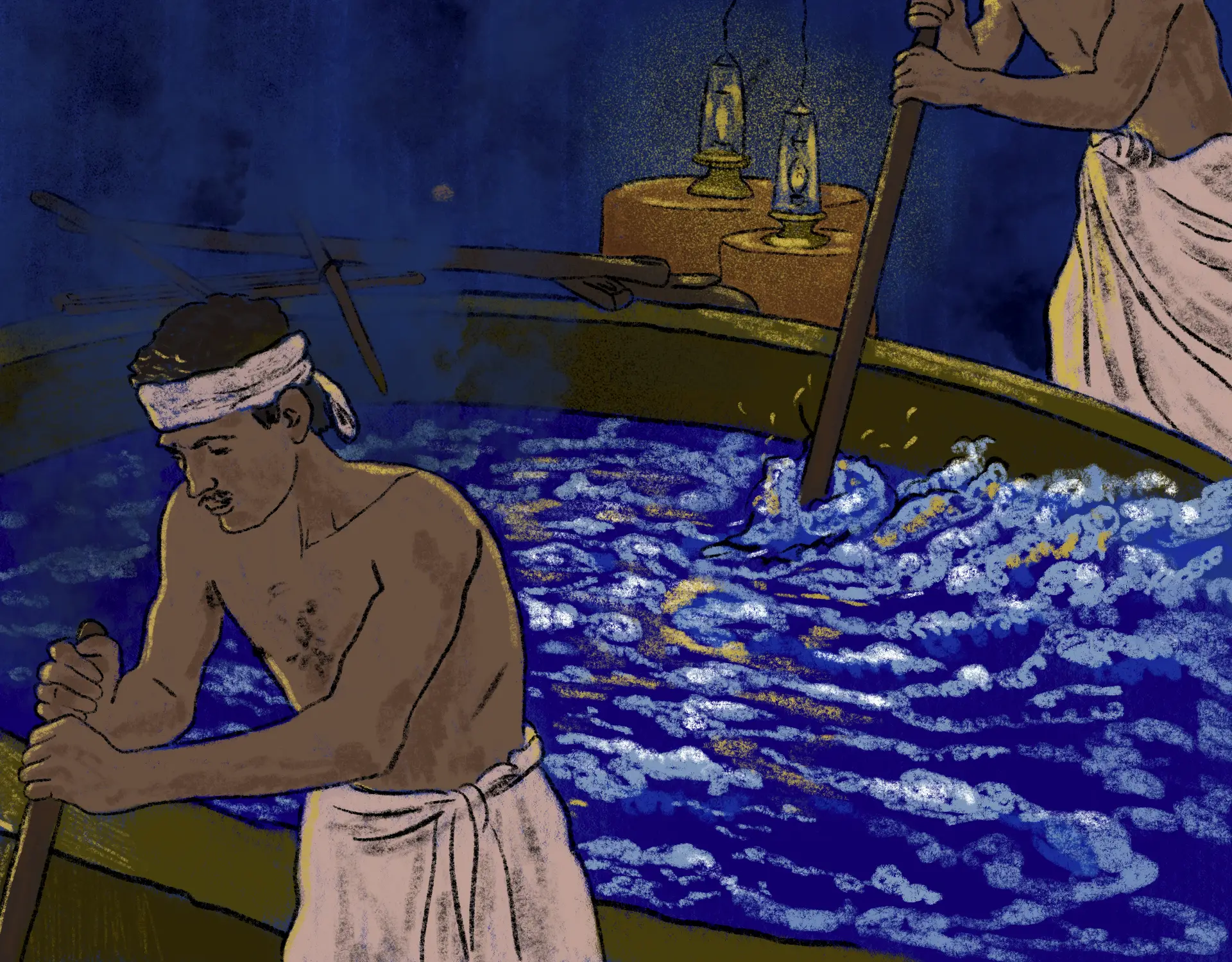
Here, leaves are soaked until the invisible indican releases its secret and, beaten with air, turns to
blue foam. The colour is called nila – dark, deep, and already travelling beyond the river plains.
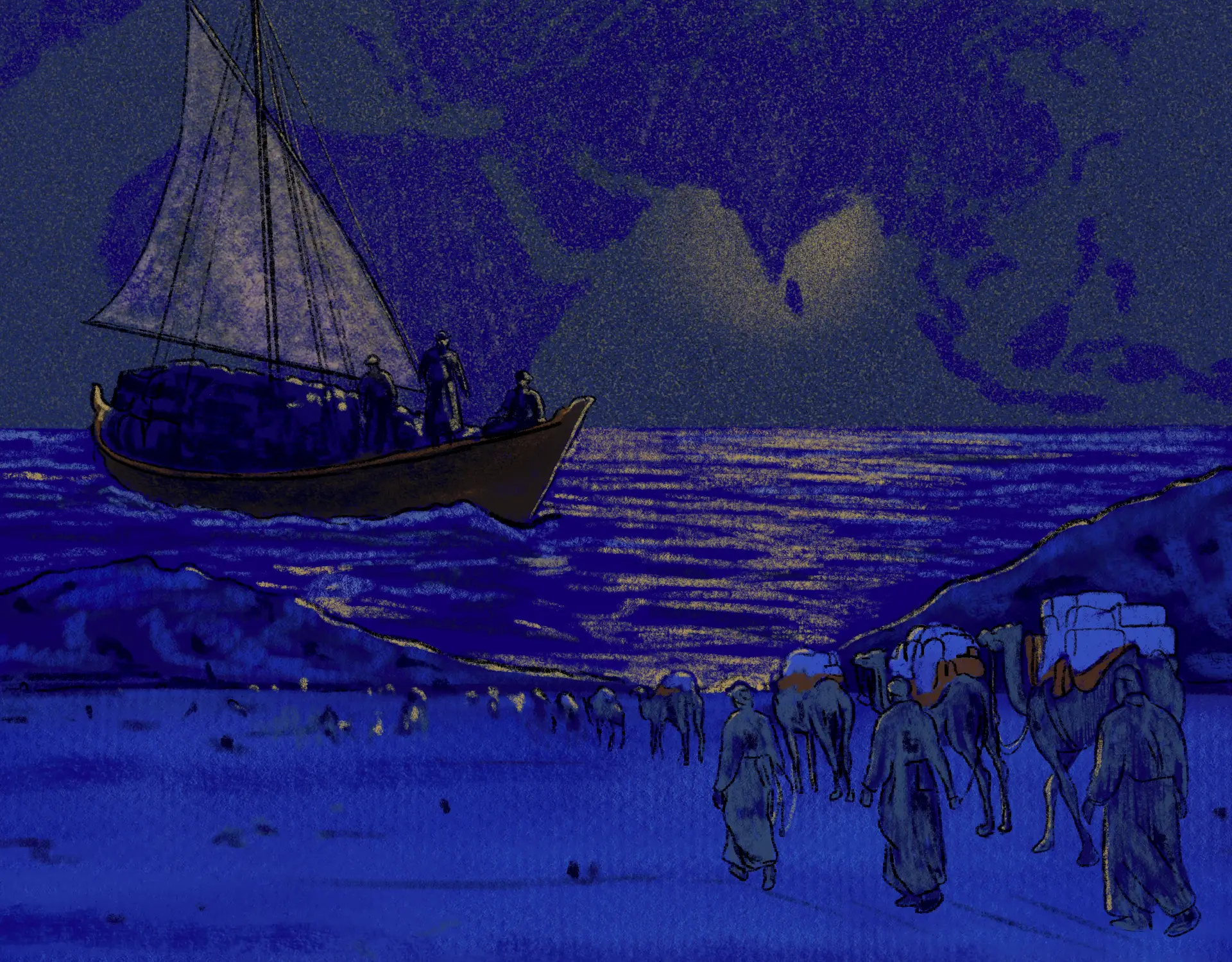
Nila becomes an-nil in Arabic, indikon in Greek, and finally indigo, a word meaning simply “from India.” The dye moves across caravans, ships, and tongues, leaving its name wherever the blue settles.
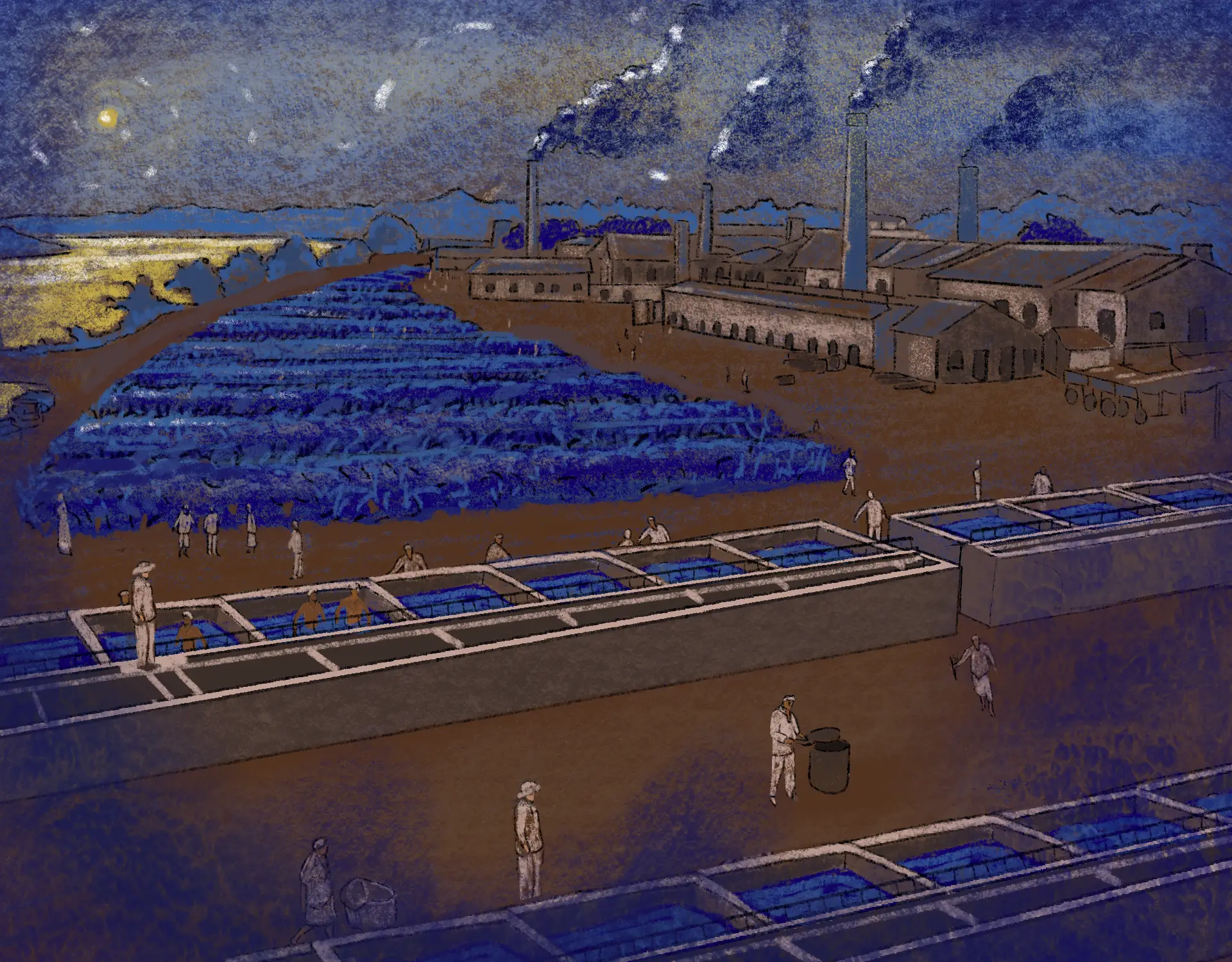
By the 1830s, four-fifths of the world’s indigo comes from these fields and vats. What was once river knowledge is now an industry feeding Europe’s hunger for blue cloth.
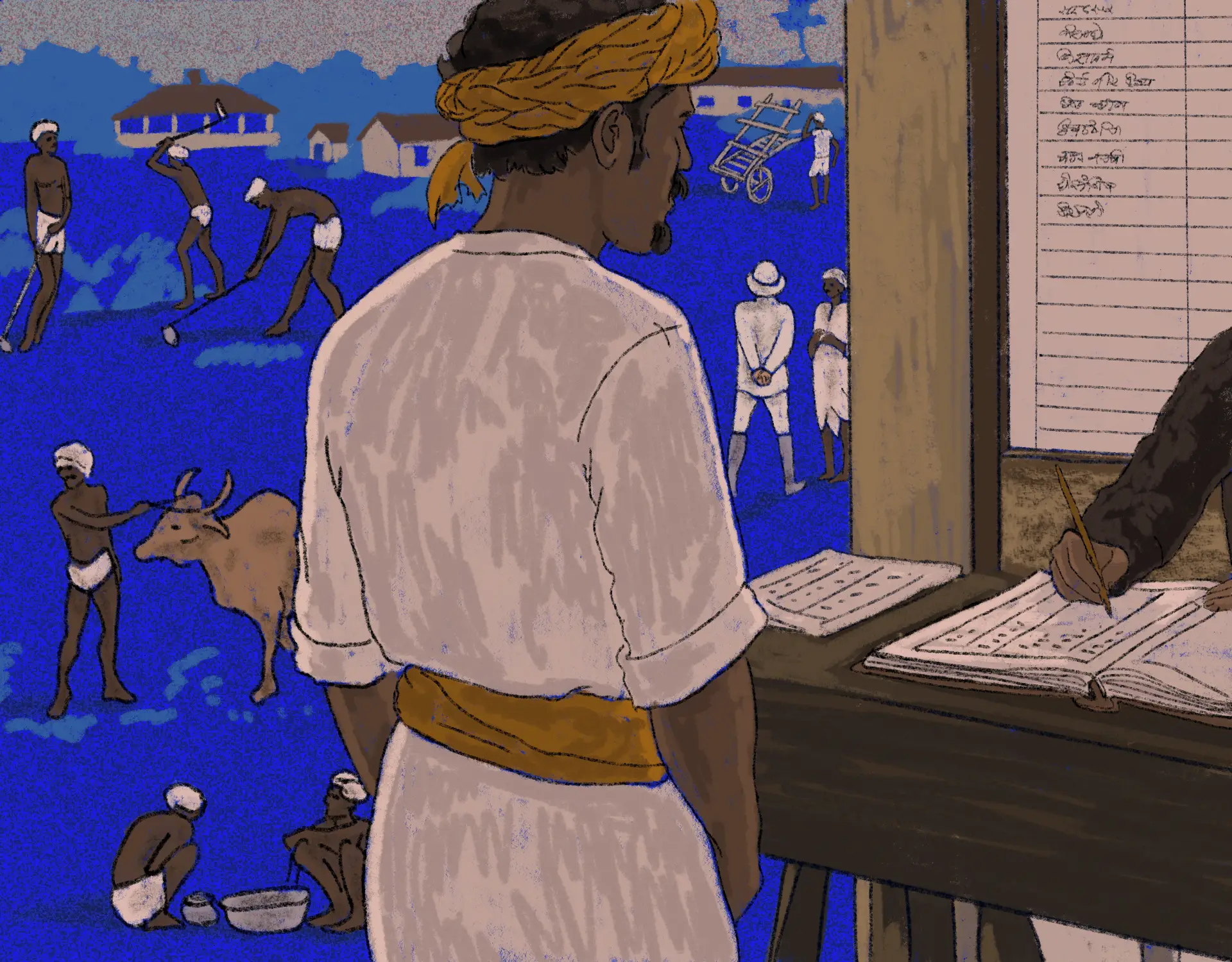
An advance is given, and the ryot’s future is quietly rewritten in a ledger. Rice fields turn blue, and
debt becomes a crop that never stops growing.
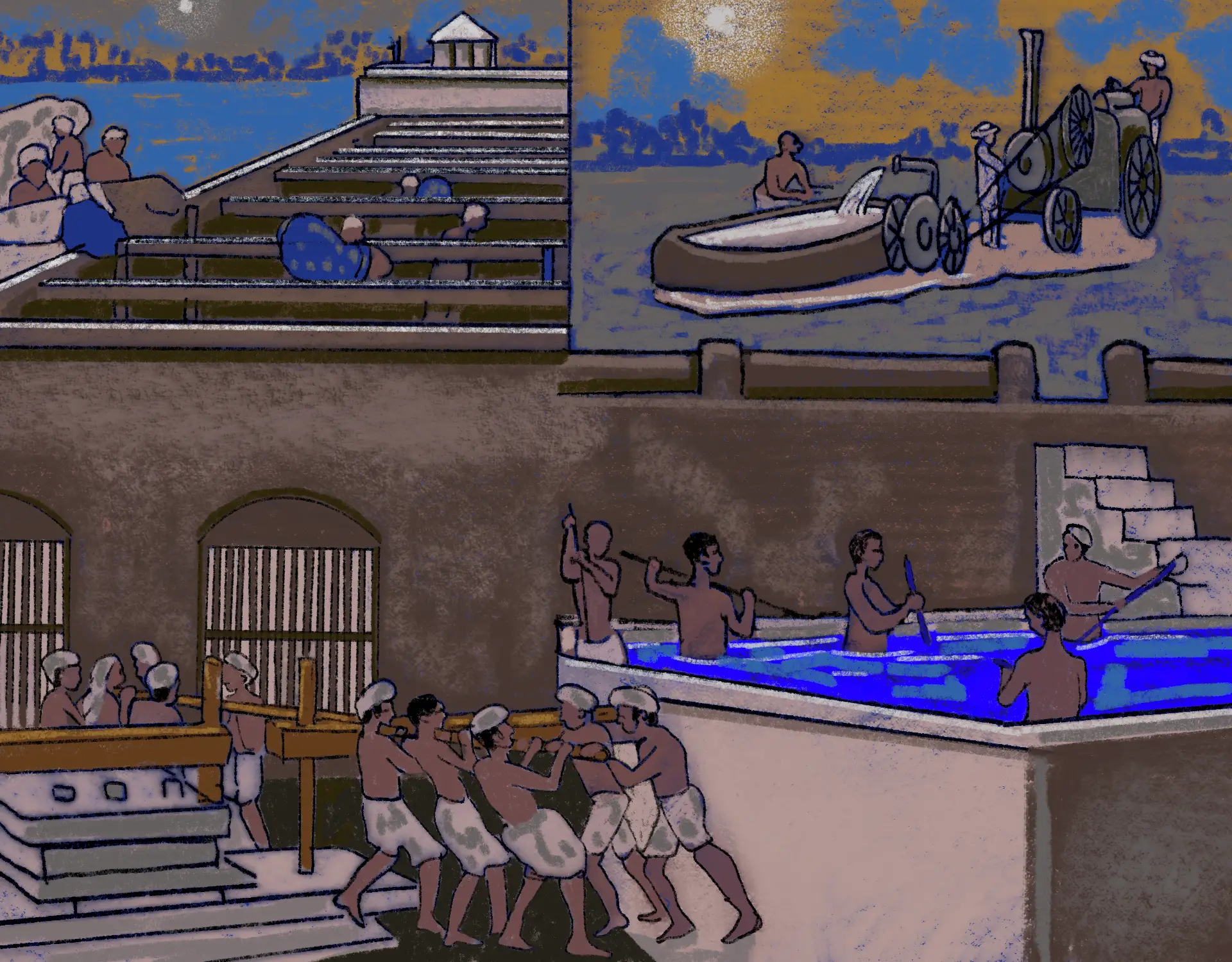
Indigo demanded relentless labour. Workers soaked, carried, pressed and beat the crop through rows
of heavy vats, often working waist-deep in the liquid for hours.
The blue that emerged from the water was made through the repeated force of their bodies.
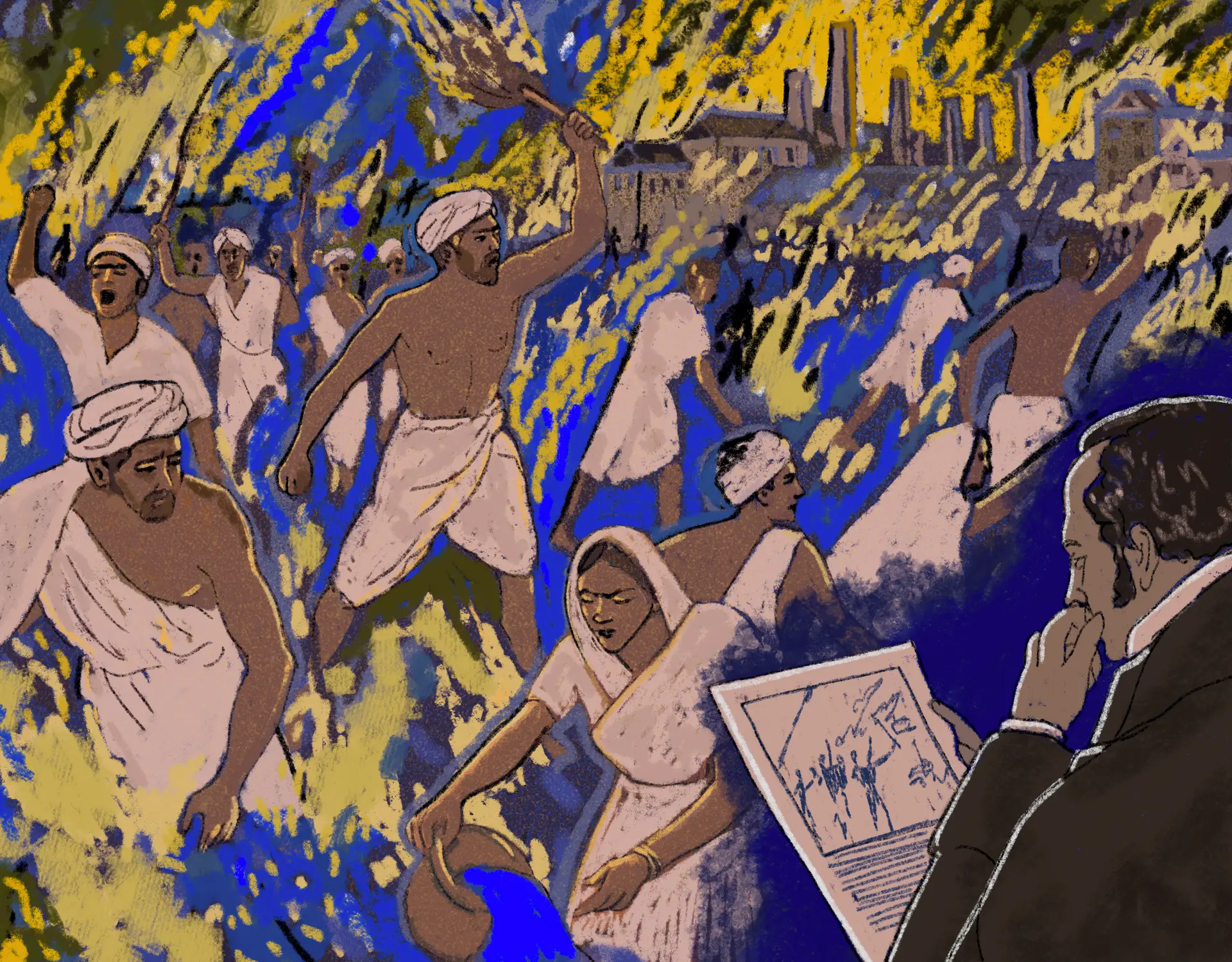
Ryots refuse the advances, burn fields, and set factories alight in what becomes the Blue Mutiny.
Their anger travels through pamphlets, theatre, and testimony, finally reaching the ears of the rulers.
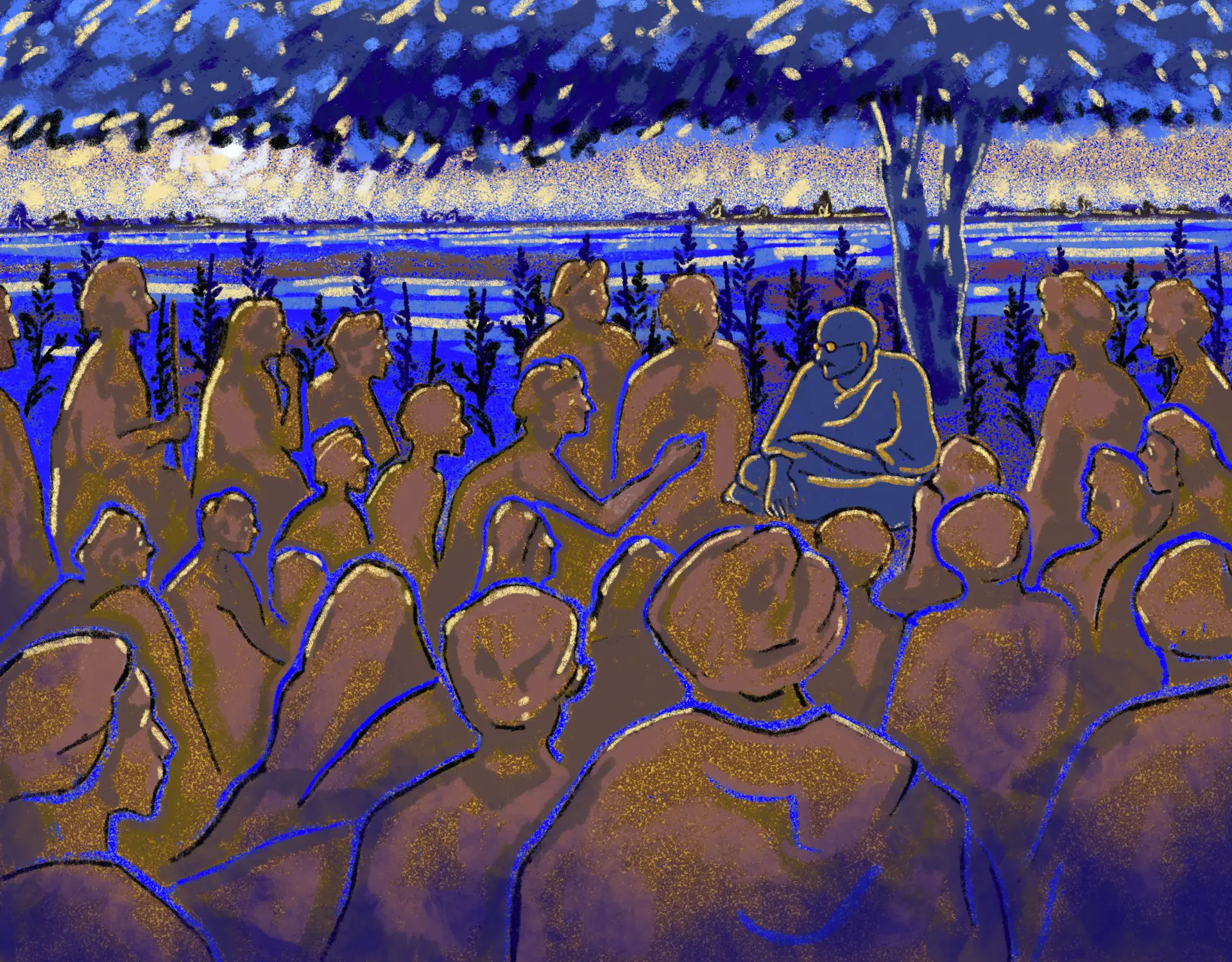
Years later in Champaran, Gandhi listens to indigo farmers speak of the same oppression. Blue
becomes not a crop, but the ground on which non-violence takes root.
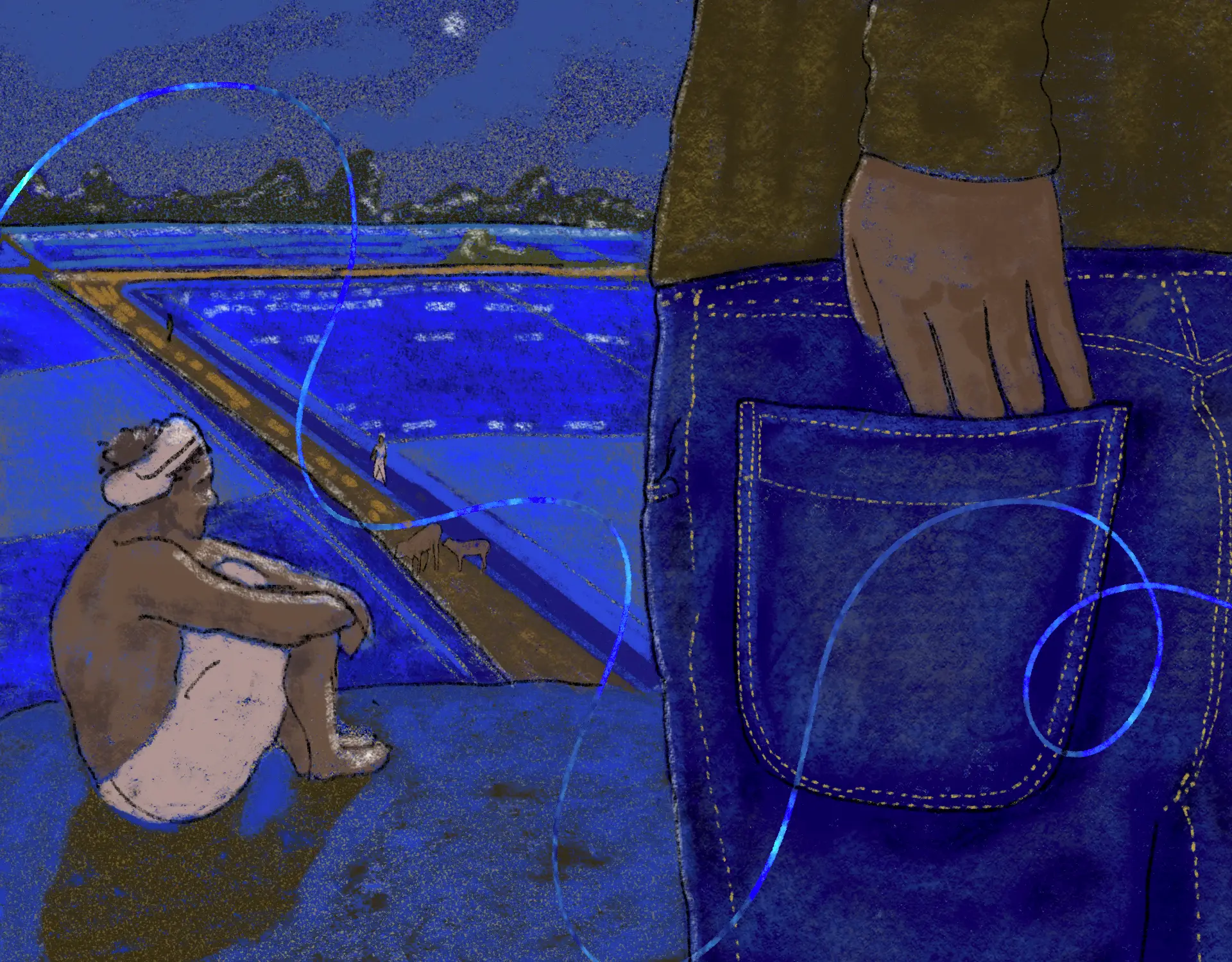
Indigo is eventually made chemically, without leaves, and the dye leaves the field for the factory.
Indigo farming returns to ordinary production alongside rice, while chemically made indigo
becomes the blue used in the denim we know today.
The blue has travelled far from the fields.
But the froth from the vats, the smoke from the factories, and the memory of the labour that made it
still linger.
The colour remains. So does what it carries.